
How Does Hypnotherapy for Weight Loss Work? A Step-by-Step Guide Blog Post
If you've ever wondered how hypnotherapy for weight loss actually works, you're not alone.
Many people hear the word hypnosis and immediately picture stage performances where volunteers cluck like chickens or forget their own names. Others imagine being unconscious or under someone else's control.
Clinical hypnotherapy is very different.
When used as part of a professional weight-loss program, hypnotherapy isn't about mind control or making someone do something against their will. Instead, it's a structured process designed to help people explore and change patterns that may be influencing their everyday choices.
That's important because, for many people, the challenge isn't a lack of information.
Most people already know that eating more vegetables, moving their body regularly, drinking water, and getting enough sleep support their health.
The difficult part is consistently following through when stress, emotions, habits, routines, and familiar environments begin influencing their decisions.
Understanding how hypnotherapy works can help separate fact from fiction and give you realistic expectations about what the process may—and may not—offer.
Why Knowing Isn't Always Enough
Imagine learning to drive.
At first, every action requires conscious thought.
You think about the mirrors.
The pedals.
The speed.
The turn signal.
Where your hands should be on the steering wheel.
After enough repetition, something changes.
You no longer think through every individual movement.
Driving becomes automatic.
Many eating behaviors develop in much the same way.
Perhaps every evening after dinner you automatically reach for dessert.
Maybe every stressful workday ends with a trip through the drive-thru.
Or perhaps watching television has become inseparable from snacking.
These aren't necessarily conscious decisions anymore.
They're familiar routines that have been repeated enough times to feel almost automatic.
That doesn't mean they're permanent.
But it does explain why simply knowing what to do isn't always enough to change what you've been doing for years.

What Happens During Hypnosis?
One of the biggest misconceptions about hypnosis is that you'll lose awareness or control.
In reality, most people remain aware of what's happening throughout the session.
Many describe hypnosis as feeling similar to becoming deeply absorbed in a good book, a movie, or daydreaming while driving a familiar route.
Your attention becomes more focused.
Outside distractions become less important.
Your mind becomes quieter.
You're still capable of hearing the hypnotherapist.
You can speak if you want to.
You can end the session if you choose.
Hypnosis is not something that's done to you.
It's a state you actively participate in.
That distinction matters because successful hypnotherapy depends on collaboration rather than control.
A Typical Weight-Loss Hypnotherapy Session
Although every practitioner has a slightly different approach, most professional weight-loss hypnotherapy sessions follow a similar structure.
1. Understanding Your Goals
Every session begins with conversation.
Rather than immediately beginning hypnosis, your hypnotherapist spends time understanding your experiences.
Questions may include:
What have you already tried?
When do you struggle the most?
What situations tend to trigger overeating?
What would success look like for you?
This information helps personalize the session rather than relying on a generic script.
2. Relaxation and Focus

Next, your hypnotherapist guides you into a relaxed state of focused attention.
This often involves:
guided breathing
progressive relaxation
visualization
focused attention exercises
There is no "right" way to experience hypnosis.
Some people feel deeply relaxed.
Others simply notice they feel calmer and more focused.
Both experiences can be completely normal.
3. Exploring Helpful Patterns
Once you're comfortably focused, your hypnotherapist may begin introducing ideas, imagery, questions, or therapeutic techniques designed to support healthier patterns.
Depending on your goals, this might involve working with areas such as:
emotional eating
stress eating
self-confidence
motivation
consistency
body image
self-sabotage
automatic eating habits
Rather than forcing change, the process encourages your mind to begin viewing familiar situations differently.
4. Reinforcing New Choices
Toward the end of the session, your hypnotherapist helps reinforce the healthier behaviors you're working toward.
Examples might include:
pausing before emotional eating
recognizing physical hunger
enjoying movement
making thoughtful food choices
responding differently to stress
Over time, these healthier responses can begin feeling more familiar through repetition and practice.
How Long Does Hypnotherapy Take to Work?
One of the most common questions people ask is:
"How many sessions will I need before I notice a difference?"
The honest answer is that it depends.
Every person's weight-loss journey is different because every person's habits, routines, experiences, and goals are different.
Some people notice changes surprisingly quickly.
They may find themselves naturally eating slower, becoming more aware of fullness, or pausing before reaching for food in situations where they normally wouldn't have thought twice.
Others notice more gradual changes.
Perhaps they become less reactive to stress.
Maybe they're able to recover more quickly after an unhealthy meal instead of giving up on the rest of the day.
Some begin feeling more motivated to prepare meals, take walks, or follow through on commitments they've struggled to maintain in the past.
These changes may seem small at first.
But sustainable weight loss is often built from many small behavioral shifts rather than one dramatic breakthrough.
Rather than asking,
"How fast will I lose weight?"
A more helpful question might be,
"How consistently am I beginning to make choices that support the person I'm becoming?"
That's the kind of progress that often leads to long-term change.
Does Everyone Experience Hypnosis the Same Way?
No.
Just as no two people experience meditation, exercise, or learning in exactly the same way, hypnosis is also a personal experience.
Some people describe feeling deeply relaxed.
Others feel simply calm and focused.
Some experience vivid mental imagery.
Others notice mostly a shift in how they think and respond.
There isn't a "correct" way to experience hypnosis.
Many people are surprised afterward because they expected to feel completely unconscious.
Instead, they realize they heard most of what was said and remained aware throughout the session.
That's completely normal.
The effectiveness of hypnotherapy isn't determined by how deeply relaxed someone appears.
It's determined by how well they're able to engage with the process and apply what they're learning outside the therapy room.
Common Myths About Weight-Loss Hypnotherapy
Unfortunately, many misconceptions continue to surround hypnosis.
Let's clear up a few of the most common ones.
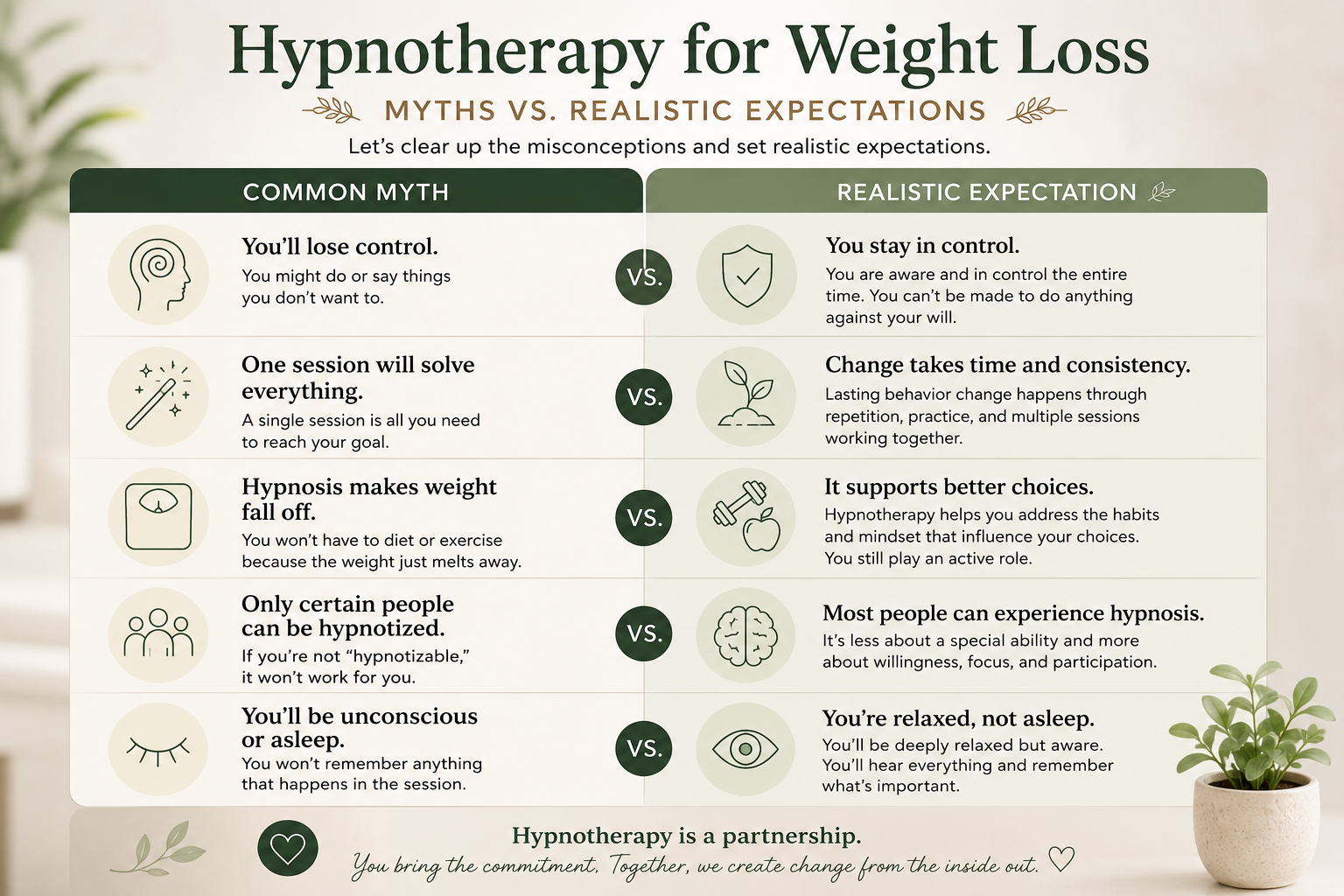
Myth #1: You'll Lose Control
Reality:
Throughout hypnosis, you remain aware of your surroundings and cannot be forced to do something against your values or wishes.
Hypnotherapy is a collaborative process—not mind control.
Myth #2: One Session Solves Everything
Reality:
Meaningful behavior change usually develops through repetition, practice, and reinforcement.
Just as one workout doesn't build lifelong fitness, one hypnotherapy session is rarely expected to change years of established habits.
Myth #3: Hypnosis Makes Weight Fall Off
Reality:
Hypnotherapy doesn't burn calories or replace healthy eating and physical activity.
Instead, it may help support healthier decisions by addressing behaviors and patterns that influence those choices.
Myth #4: Only Certain People Can Be Hypnotized
Reality:
Most people can experience hypnosis when they're willing to participate and can focus their attention.
It's less about having a special ability and more about engaging in the process.
Why Consistency Matters More Than Motivation
Many people believe successful weight loss depends on staying motivated.
But motivation naturally rises and falls.
Some days you'll feel energized.
Other days you won't.
If lasting success depended entirely on motivation, very few people would ever reach their goals.
Consistency is different.
Consistency means continuing to make supportive choices even when motivation isn't particularly high.
That's one reason hypnotherapy often focuses less on creating excitement and more on reinforcing healthier habits that can become increasingly familiar over time.
Instead of relying on willpower every single day, the goal becomes making healthy behaviors feel more natural and less like a constant battle.
Over time, those repeated choices begin creating momentum.
And momentum often feels much more sustainable than motivation alone.
Can Hypnotherapy Be Combined With Other Weight-Loss Approaches?
Absolutely.
Many people choose to use hypnotherapy alongside other healthy lifestyle strategies.
These may include:
balanced nutrition
regular physical activity
working with a registered dietitian
physician-guided weight management
behavioral coaching
GLP-1 medications prescribed by a healthcare provider
Hypnotherapy isn't intended to replace these approaches.
Instead, it may complement them by helping support the behaviors that make following through easier over time.
For example, someone taking a GLP-1 medication may still find themselves eating out of stress, habit, boredom, or routine—even if physical hunger has decreased.
Similarly, someone who understands healthy nutrition may still struggle with consistency during busy or emotionally challenging periods.
These are examples of areas where hypnotherapy may become a valuable addition to an overall weight-management plan.
Final Thoughts
Understanding how hypnotherapy works begins with understanding what it is—and what it isn't.
It isn't magic.
It isn't mind control.
It isn't a replacement for healthy eating, physical activity, or medical care.
Instead, hypnotherapy is a collaborative process that may help support healthier habits, emotional awareness, and behavior change by working with the patterns that often influence everyday choices.
For many people, the greatest challenge isn't learning what to do.
It's consistently doing it.
If that sounds familiar, hypnotherapy may be worth exploring as one part of a broader approach to long-term weight management.
Remember, lasting change rarely happens overnight.
More often, it develops one thoughtful choice at a time.

Choose Your Next Step

Everyone's journey looks a little different. Choose the next step that feels right for where you are today.
📖 Want to Learn More?
Explore Hypnotherapy for Weight Loss: The Complete Guide to discover how hypnotherapy may support healthier habits, emotional eating, cravings, motivation, and long-term behavior change.
🎧 Ready to Get Started on Your Own?
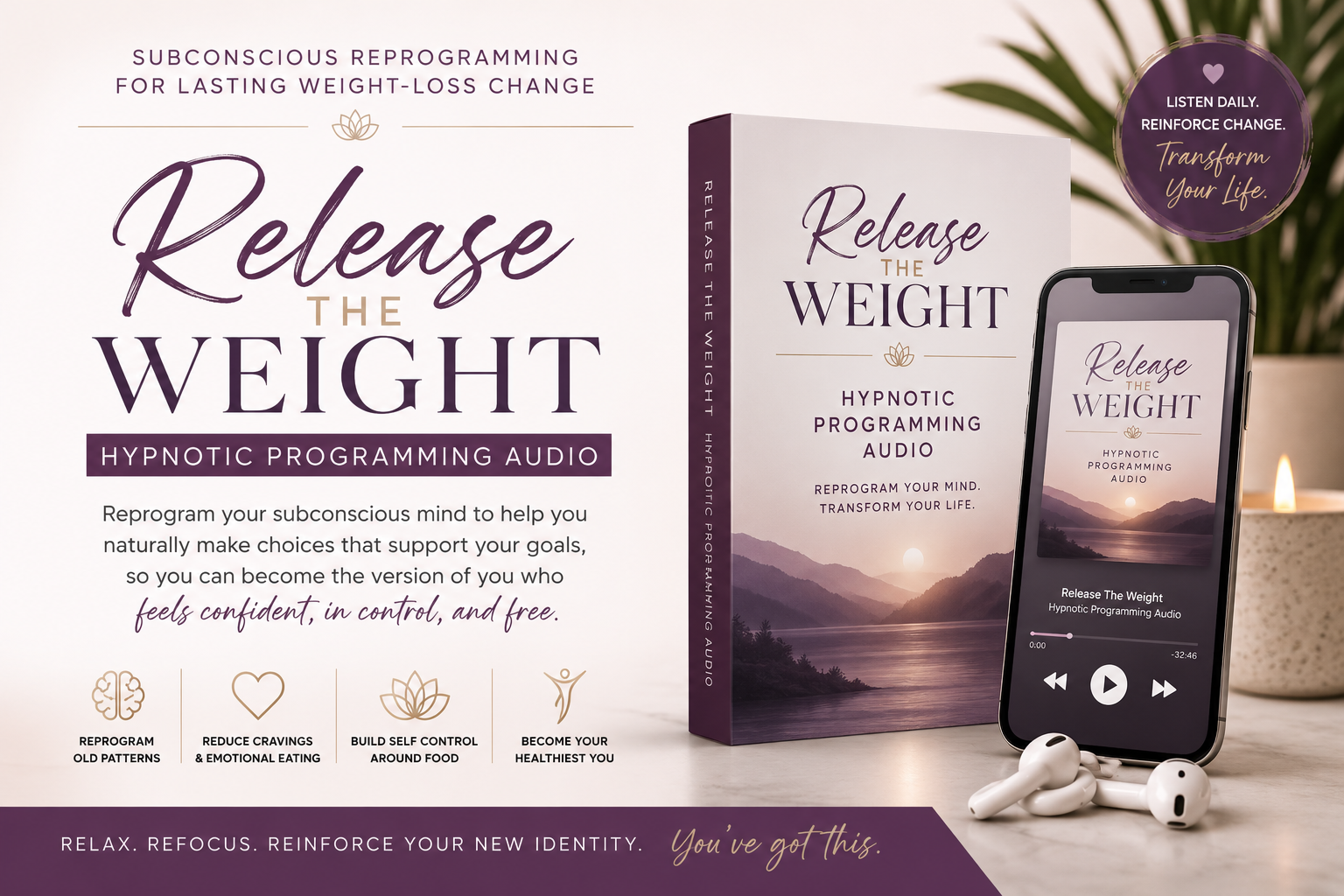
Explore the Release the Weight Hypnotic Programming Audio, designed to reinforce healthier habits and help you stay consistent between sessions.
💬 Looking for Personalized Support?
Schedule a Free 15-Minute Consultation to discuss your goals, ask questions, and determine whether weight-loss hypnotherapy may be a good fit for you.
